DIGITAL NEWS USA

July 1, 2026 10:17 PM ET
Daily Intelligence Briefing
Brent Crude
$72.68
-2.1% (Q2 2026 posted steepest quarterly decline since 2020; down 27.41% over past month)
WTI Crude
$68.06
-2.07%
S&P 500
7,483.23
-0.22%
War Day
124
Since Feb 28
Doha Technical Talks End With 'Positive Progress' — Next Round After Khamenei Funeral Photo: US Department of Defense / DVIDS
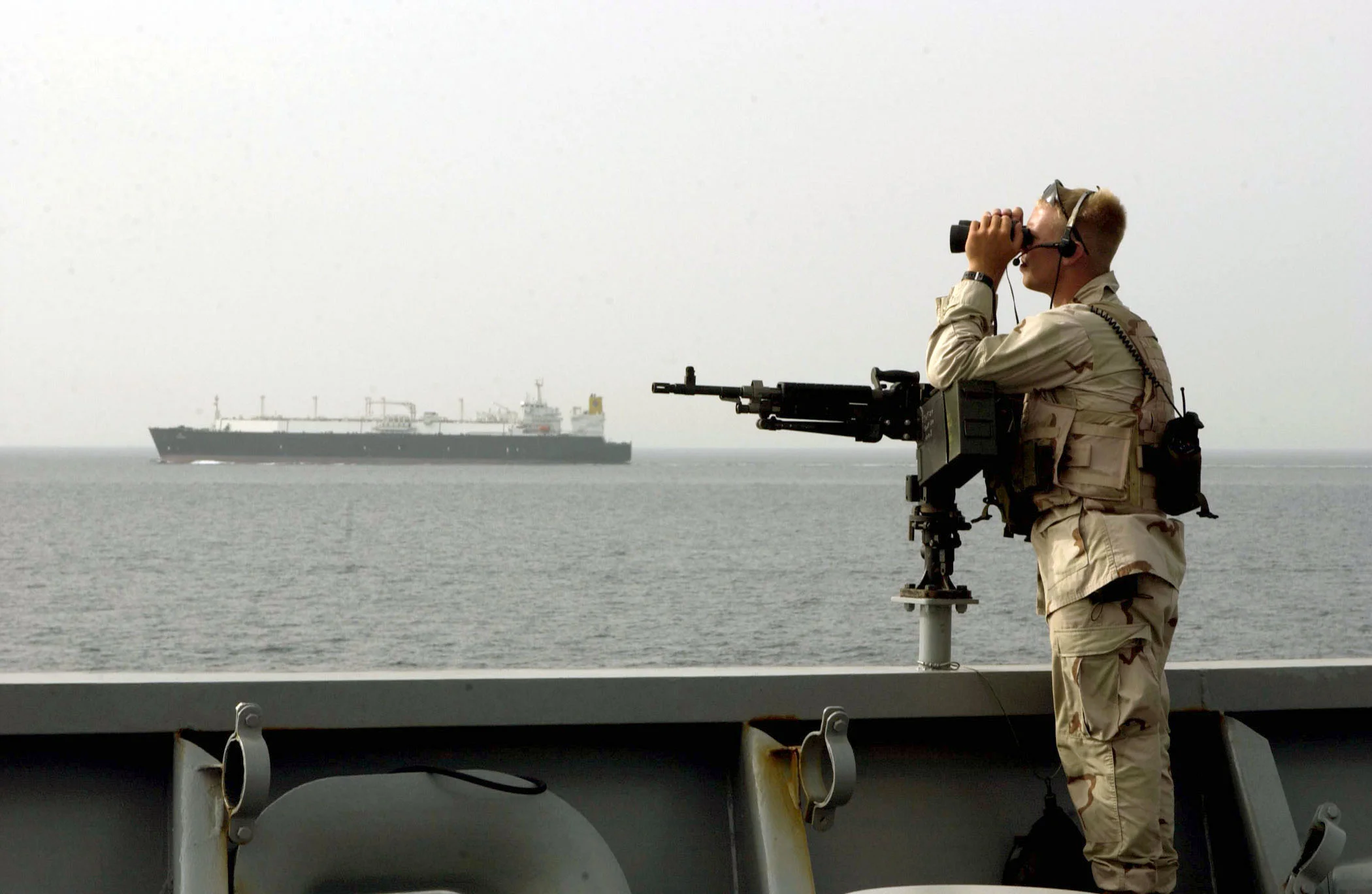
US Navy 050505-N-4309A-110 — Master-at-Arms Seaman Matthew Ramer, assigned to Mobile Security Detachment Two Four (MSD-24), stands watch as a tanker transits the Strait of Hormuz.
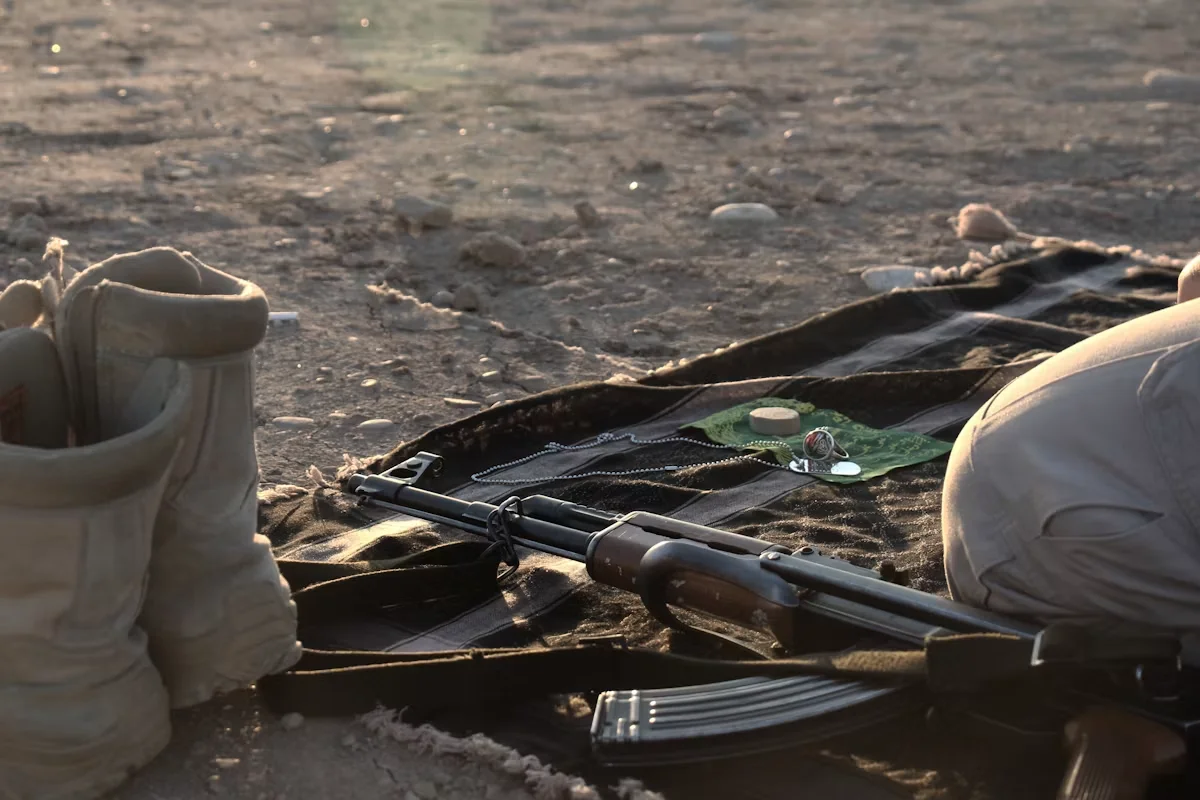
Combat boots, rifle, dog tags, and prayer stone on desert sand Photo by Mojtaba Taghizadeh on Unsplash
Tankers anchored in the Persian Gulf — Video: Pexels
Iran War — Peace Deal

Doha Technical Talks End With 'Positive Progress' — Next Round After Khamenei Funeral

Indirect US-Iran technical negotiations concluded in Doha on July 1 with Qatari and Pakistani mediators declaring 'positive progress' on implementation of the Islamabad MOU framework. Both delegations agreed to continue talks, with the next round scheduled after Khamenei funeral processions conclude July 4-9. The talks are technical-level — US and Iranian negotiators in separate rooms — not a high-level political breakthrough.
Bottom Line: The Doha round confirms the ceasefire architecture is holding — barely. The core agenda items (Hormuz navigation rules, $6 billion in unfrozen Iranian assets, lasting ceasefire verification) remain unresolved. The Witkoff-Kushner presence in Doha is political staging: they met Qatar's PM but were not in the technical negotiations themselves. Iran's delegation was led by Ghalibaf's Burgenstock counterpart Kazem Gharibabadi, with central bank and agriculture ministry representatives present — the asset unfreezing and purchasing mechanisms are clearly the immediate transactional priority for Tehran. The conspicuous pause until after the July 4-9 funeral processions is not a delay tactic; it is operationally rational given that Iran's new supreme leader Mojtaba Khamenei cannot be seen conducting business-as-usual diplomacy while his father is being buried across a six-day, multi-city mourning spectacle. The harder question — what happens when the 60-day Islamabad MOU clock runs out and verification mechanisms, Lebanese front terms, and missile program limits remain unresolved — is what nobody in Doha is publicly answering.
Military Operations

CENTCOM Hosts 12-Nation Security Dialogue in Bahrain — Lebanon and Syria Attend for First Time

US Central Command, hosted by Bahrain's defence forces, convened a regional security dialogue on July 1 with military representatives from Bahrain, Egypt, Jordan, Kuwait, Lebanon, Oman, Qatar, Saudi Arabia, Syria, UAE, and Yemen — 11 nations plus the US. Admiral Brad Cooper chaired. CENTCOM described discussions as focused on 'the current regional security environment and opportunities for enhancing defense collaboration.' Lebanon and Syria's participation is noteworthy — both countries have historically been outside the US-led Gulf security architecture. Israel was not listed as a participant, which is operationally significant given ongoing IDF operations in Lebanon and Syria. The dialogue signals the US is actively building a post-war regional defense framework, but the absence of Israel from the table reflects the fundamental tension between Washington's two simultaneous objectives: negotiating a deal with Iran while covering Israel's continued military campaign.

Source: DVIDS (official CENTCOM release), Al Arabiya, Haaretz

MH-60S Seahawk Crew Member Missing After Emergency Water Landing in Arabian Sea

At 3:30 a.m. ET on July 1, an MH-60S Sea Hawk helicopter assigned to USS George H.W. Bush (CVN-77) conducted an emergency water landing in the Arabian Sea. Three of four crew members were recovered and are in stable condition aboard the carrier. One crew member remains missing; search and rescue operations are ongoing. US Naval Forces Central Command stated there is 'no indication the emergency was caused by hostile action.' The George H.W. Bush is operating in the region as part of the ongoing US force posture. This is a non-combat incident, but the loss of a crew member and aircraft from a carrier strike group conducting sustained operations in a contested theater has operational readiness implications.

Source: CBS News, USA Today, The War Zone

Kurdish-IRGC Clashes Spread Across Four Cities in West Azerbaijan Province

PJAK confirmed four of its fighters killed in clashes near Mahabad, with the group claiming several IRGC personnel also killed or wounded. The IRGC separately claimed it 'completely destroyed a six-member infiltration team' in West Azerbaijan. Eastern Kurdistan Defense Units (YRK) are also engaged. Clashes are now reported across Mahabad, Marivan, Paveh, and Baneh — the geographic spread suggests coordinated or expanding operations rather than isolated incidents. In Baneh, gunmen attacked a police checkpoint, killing two officers and injuring three others including a civilian child. A five-group Kurdish opposition alliance — PJAK, KDPI, PAK, Komala, and others — is now operating in coordination. KDPI spokesperson Khalid Azizi said Kurdish forces are 'prepared to challenge Iran but will not launch a ground offensive yet.' The clashes reportedly intensified from June 7 onward. Iran's IRGC is now managing simultaneous pressure on its western borders while its core military assets are degraded from 124 days of US strikes.

Source: Fox News, Newsweek, Jerusalem Post, IranWire, ANF News
Diplomacy & Negotiations

Gharibabadi Leads Iranian Delegation — Asset Unfreezing and 'Necessary Goods' Purchases Are Tehran's Immediate Priority

Iran's Doha delegation was headed by Kazem Gharibabadi and included representatives from the foreign ministry, central bank, and agriculture ministry. The presence of central bank and agriculture ministry officials is a direct signal of what Iran needs most immediately: access to frozen funds and the ability to purchase food and essential goods. Iranian state media (IRNA) said part of the initial $6 billion tranche will be used to purchase 'necessary goods' and 'required goods.' President Pezeshkian publicly defended the negotiations and confirmed $6 billion will be released out of a total ~$12 billion frozen, with steps 'underway.' Pezeshkian is playing a centrist role — providing public political cover for a deal that hardline IRGC-aligned factions are visibly trying to sabotage (see internal_iran section). IRNA reporting on the funds should be read as regime messaging to a domestic audience that is watching pension funds collapse and food prices surge 50%.

Source: Times of Israel, WION, Arab News, IRNA via Arab News, France24, Al Arabiya

Trump Claims Denuclearization 'Moving Along Well' — Vance Warns War Could Resume

President Trump told reporters: 'The denuclearization of Iran is moving along well. They've had very good meetings, and we'll see.' VP JD Vance, speaking at Naval Air Station Oceana in Virginia Beach, stated: 'We've accomplished the core mission, which is to ensure that the Iranians never have a nuclear weapon.' Vance simultaneously warned that whether war resumes is 'kind of up to the Iranians.' The dual message — deal is working, but we can restart — is deliberate coercive diplomacy. What neither Trump nor Vance addressed is how 'denuclearization' is defined, verified, or enforced under the current MOU framework. The Islamabad MOU and Burgenstock roadmap do not publicly commit Iran to a specific nuclear timeline or verification regime — that gap is the central unresolved issue that technical talks in Doha are supposed to be working through.

Source: CBS News, CNN, Fox News, The Hill, The Hindu

CFR: Iran's Missile Capabilities, Drone Networks, and Proxy Forces Left Out of Current MOU

CFR analyst Elisa Catalano Ewers told RFE/RL on July 1 that while Gulf states bore the brunt of Iran's attacks during the six-to-seven weeks of sustained kinetic conflict, the current pause 'has done little to resolve the core issues driving regional instability — specifically Iran's ballistic missile capabilities, drone networks, and proxy forces, which were left out of the current memorandum of understanding.' This is the central structural problem with the Islamabad MOU: it is a ceasefire mechanism, not a peace agreement. Iran's proven ability to put missiles and drones into Gulf oil production infrastructure — Saudi fields, Kuwaiti and UAE facilities, Qatari installations — remains intact. The MOU buys time. It does not eliminate Iran's strike capability, and Gulf states know it, which is why they are at the CENTCOM security dialogue in Bahrain today building a new defense architecture.

Source: RFE/RL, CFR (via RFE/RL)
Inside Iran

Iranian State Television Cuts Off Parliament Speaker Ghalibaf Mid-Sentence — Public Censorship Crisis Exposes Hardliner Opposition to Deal

On June 30, Iranian state television abruptly cut off a pre-recorded broadcast by Parliament Speaker Mohammad-Baqer Ghalibaf mid-sentence — at the exact moment he referenced an earlier agreement enabling ~$6 billion in Iranian funds to be transferred from South Korea to Qatar for humanitarian purchases. Parliament's media center issued an official condemnation of the censorship. Ghalibaf is the head of Iran's negotiating team — the man who sat across from Vance at Burgenstock. The fact that IRGC-aligned state media is literally cutting his microphone while he discusses the financial mechanics of a deal he negotiated tells you everything about the internal power struggle. This is not a procedural dispute. Hardline factions are using state broadcasting infrastructure to signal their opposition to the deal's economic provisions and to undermine Ghalibaf's domestic authority. The censorship is the message.

Source: IranWire, Iran International, NCRI (opposition — flag as politically motivated but corroborated by IranWire)

Khamenei Funeral Set July 4-9 — Six-City Procession With 15-20 Million Mourners Expected, 'Unprecedented' Security Operation Underway

Funeral ceremonies for Ali Khamenei will run July 4-9, following a route from Tehran through Qom, then to Najaf and Karbala in Iraq, before final burial in Mashhad on July 9. Iranian authorities are preparing what they describe as an 'unprecedented security operation' — explicitly to prevent crowd crush deaths like those at the Khomeini (1989) and Soleimani (2020) funerals. The six-day, multi-city procession involving potentially 15-20 million mourners is itself a massive governance and security challenge for a regime simultaneously managing a ceasefire, political infighting, economic collapse, and Kurdish insurgency on its western borders. New supreme leader Mojtaba Khamenei has been conspicuously low-profile since taking power March 8 — Vox reported on July 1 that his whereabouts and public posture remain unclear, an unusual situation for a head of state in the middle of active war diplomacy.

Source: Reuters Connect, IQNA, Times of Israel, Iran International, Vox

Telecom Retirees March in Tehran, Gilan, and Kurdistan — Pension Theft Protests Signal Widening Economic Discontent

Telecom retirees protested across Tehran, Gilan, and Kurdistan in late June 2026, chanting 'We don't want an incompetent government!' — specifically targeting IRGC-controlled foundations accused of plundering pension funds. The protests reflect the broader economic catastrophe: inflation running at 40%+, food prices up 50%+ in some categories, the rial at 1.3-1.5 million per USD. Iran International assessed that the postwar economy 'will need far more than a diplomatic breakthrough to escape chronic inflation and structural weakness.' The $6 billion in frozen assets, if released, provides a temporary revenue injection — but it does not address the structural economic rot driven by IRGC penetration of the civilian economy. Independent verification of street-level protest activity on July 1 specifically is limited — most reporting originates from opposition sources (NCRI, IranWire, Iran International) given regime media control and war conditions. Absence of independent confirmation is itself an intelligence gap, not evidence protests have stopped.

Source: NCRI (opposition — flag accordingly), Iran International
Regional Impact

Israeli Defense Minister Katz Formalizes Indefinite IDF Occupation of Lebanon, Syria, and Gaza Security Zones

Israeli Defense Minister Israel Katz stated on July 1 that 'the IDF will remain in the security zones in Lebanon, Syria and Gaza until further notice, in order to protect Israel's residents and communities from jihadist terrorists.' Deputy Foreign Minister Sharren Haskel separately confirmed Israel will continue military operations against Hezbollah despite the existing ceasefire framework, reiterating the Israeli position that Hezbollah disarmament is non-negotiable. Israel is not a signatory to the Islamabad MOU and Israeli officials have explicitly stated Jerusalem is not bound by its terms. AP reported that more than 4,000 people in Lebanon have been killed in Israeli strikes since March 2026. The term 'ceasefire' is functionally misleading: AP's July 1 analysis noted that while ceasefires of varying durability exist between Israel-Hamas, Israel-Hezbollah, and the US-Iran, all three are violated regularly. Israel's position creates a direct structural problem for US-Iran negotiations — Iran cannot credibly sign a deal that doesn't address Israeli operations in Lebanon, and Israel is not at the table.

Source: AP, The Hindu, The Defense Post, AFP via Oman Observer, The Tribune/ANI

Afghanistan-Pakistan Cross-Border War Escalates — Taliban Strikes Balochistan, Pakistan Intercepts Four Drones

Taliban forces launched fresh strikes on targets in Pakistan's Balochistan and Khyber Pakhtunkhwa provinces on July 1, claiming they were targeting ISIS hideouts. Pakistan said its forces intercepted and shot down four drones over Balochistan; several people were injured. This follows Pakistan's airstrikes on eastern Afghanistan on June 29, which Afghan sources say killed 28-36 civilians and injured 49-160+. Pakistan says it targeted TTP and ISIS-K militant camps. This is now a full-scale cross-border military conflict between a nuclear-armed state and a Taliban-controlled territory, running in parallel with the Iran war. Pakistan is also one of the two mediators — alongside Qatar — in the Doha US-Iran talks. Islamabad is simultaneously mediating a war ceasefire while conducting airstrikes on its own northwestern frontier. That context has not featured prominently in Western coverage of the Doha talks.

Source: AP via US News, Times of India

Iraq Routes Crude and Naphtha Through Syrian Ports as Gulf Shipping Disruption Forces Energy Rerouting

Iraq is preparing to export crude oil and naphtha through Syrian ports after the Iran war severed its main Gulf shipping routes, according to Reuters. Syria and Iraq are expanding cooperation across energy, security, and infrastructure — including discussions on rehabilitating oil pipelines connecting the two countries. An Iraqi oil tanker was destroyed after overturning in Syria on July 1. The rerouting is a direct consequence of the war-era disruption to Gulf shipping: Iraq, which depends heavily on Gulf export routes, is being forced to find alternatives through Syria's Mediterranean access. This represents a significant shift in regional energy logistics and creates new economic interdependence between Baghdad and Damascus at a moment when Israel is conducting airstrikes in Syria and occupying the UN-patrolled buffer zone.

Source: Reuters, Shafaq News, Levant24
Conflicting Reports — Read Critically

Iranian container ship grounding in Strait of Hormuz

IRIB (Iranian state television) Iranian state media / IRGC information channel A foreign-flagged container ship ran aground after using a route not approved by Iran, because of shallow waters. Ship was carrying cargo and was unable to continue. Shippers must follow IRGC instructions and use the designated route south of Larak Island.
AP News, CBS News Tier 1 wire service / US broadcast AP reported the vessel was identified only as 'a foreign container ship' with no other details. CBS News stated it could not independently verify the IRIB photo of the vessel. No ship name, flag state, IMO number, owner, or cargo details were provided by any source.

Assessment: This story has IRGC information operation fingerprints all over it. No vessel name, no flag state, no IMO number, no independent maritime tracking confirmation from Lloyd's List, Ambrey, Kpler, or MarineTraffic as of report time. The IRIB narrative conveniently reinforces IRGC messaging that all ships must use Iran-approved corridors and follow Revolutionary Guard instructions. AP and CBS both reported the story while explicitly flagging they could not verify it. Treat as unverified IRGC propaganda until a named vessel with an IMO number is independently confirmed aground by a maritime tracking source.

Iranian oil exports since ceasefire — volume disputed

Tanker Trackers via RFE/RL Shipping data aggregator (Tier 2) Iran exported 50 million barrels of crude oil in the two weeks since the US naval blockade was lifted.
CNBC citing Iranian claims Tier 1 financial media reporting Iranian government figures Iran claims it is selling oil at a 20% premium and has exported 40 million barrels since the ceasefire.

Assessment: The two figures — 50 million barrels (Tanker Trackers) vs. 40 million barrels (Iranian government claim) — cover the same approximate timeframe and differ by 10 million barrels, a gap too large to attribute to methodology alone. Iranian government export figures are routinely inflated for domestic political consumption and sanctions evasion opacity. The Tanker Trackers figure is higher, which is unusual — typically Tehran overstates, not independent trackers. Neither figure has been independently confirmed by Kpler or Bloomberg's tanker tracking as of report time. The 20% premium claim is unverified and directly contradicts crude oil prices in the $68-73 range, which represent significant discounts to pre-war Brent levels.

Strait of Hormuz daily transit volume

MarineTraffic via CNN Maritime tracking platform / Tier 1 media 34 recorded crossings on June 30 — far below the pre-war average of approximately 100 daily crossings.
Bloomberg Tier 1 financial media Two large convoys of commercial ships observed crossing the Strait of Hormuz on July 1, described as 'one of the clearest examples yet' of convoy formation becoming standard navigational practice. Recovery described as 'cautious' by Kpler.

Assessment: No direct contradiction here but a meaningful discrepancy in framing. MarineTraffic's 34-crossing figure for June 30 and Bloomberg's convoy reporting for July 1 can both be true simultaneously — convoy formation compresses multiple ships into fewer, larger crossings, which would reduce the crossing count while increasing total tonnage moved. The operationally relevant metric is volume of cargo transiting, not number of discrete crossings. Neither source provides total tonnage data. Readers should be cautious about treating 'crossings' as a proxy for total flow recovery.

Analysis

The Doha Talks Are Real — But the Deal Isn't Written Yet, and Iran's Regime Is Fighting Itself

The Doha round matters because it didn't collapse. Both sides showed up, stayed in their respective rooms, and let Qatari and Pakistani mediators shuttle between them for a full day. That's not nothing when you're 124 days into a war that killed tens of thousands and put missiles into Gulf oil fields. But let's be clear about what Doha was: a technical session on financial plumbing — asset unfreezing mechanics, purchasing channels, Hormuz navigation protocols. It was not a strategic settlement. The core unresolved issues — verification of Iran's nuclear program, the Lebanese front where Israel is conducting operations outside the MOU framework, Iran's ballistic missile and drone capabilities that remain entirely intact — were not on today's agenda and are unlikely to be resolved in a single post-funeral negotiating round. The 60-day Islamabad MOU clock is running. Nobody is publicly saying what happens when it expires.

The domestic Iranian picture is more alarming than Western coverage reflects. State television cutting off the head of Iran's own negotiating delegation mid-sentence is not a minor bureaucratic dispute — it is IRGC-aligned hardliners using the broadcast infrastructure of the state to publicly kneecap the man who negotiated at Burgenstock. Ghalibaf is simultaneously Iran's chief nuclear negotiator and the target of a censorship operation by his own country's state media. New supreme leader Mojtaba Khamenei has been conspicuously absent from public view since taking power in March. Vox noticed on July 1. The question of whether Mojtaba has consolidated enough authority to actually deliver compliance with whatever deal Gharibabadi agrees to in Doha is not answered by any reporting in this briefing — and that gap is the single most important unknown in this entire negotiation.

On the Kurdish front: don't be distracted by the scale. PJAK and the Kurdish opposition alliance are not going to overthrow the IRGC. But clashes across Mahabad, Marivan, Paveh, and Baneh simultaneously, with a five-group coalition operating in coordination, represents a genuine second-front drain on IRGC resources at the worst possible moment for Tehran. Iran's western border security apparatus is being stretched while its supreme leader is being buried, its negotiators are in Doha, its state TV is censoring its parliament speaker, and its economy is in structural collapse. The regime is not about to fall. But it is managing more simultaneous crises than it has bandwidth for, and that is exactly the environment in which miscalculations happen.

What We Don't Know
  • Mojtaba Khamenei's current whereabouts, public posture, and degree of actual control over IRGC hardliners — no Tier 1 reporting on this as of July 1
  • What specific verification mechanisms, if any, are being discussed in Doha for Iran's nuclear program — no public details from either delegation
  • The unnamed container ship allegedly grounded in the Strait of Hormuz — no vessel name, IMO number, flag state, or independent maritime tracking confirmation
  • Whether Tanker Trackers' 50 million barrel export figure or Iran's 40 million barrel claim is accurate — neither confirmed by Kpler or Bloomberg tanker tracking
  • Current status of IRGC's ballistic missile and drone stockpile levels after 124 days of CENTCOM strikes on 7,000+ Iranian targets — no independent assessment published
  • What Israel's conditions are for standing down in Lebanon and Syria — Israeli officials say they are not bound by the MOU, but no Israeli redline has been publicly articulated for a negotiated Lebanese settlement
  • Specific execution figures and detention numbers inside Iran for July 2026 — human rights organizations are reporting but no Tier 1 source has provided confirmed daily figures
Sources
  1. AP News — Doha talks, ship grounding, Israel-Lebanon
  2. CBS News — Live blog: Doha talks, Vance remarks, MH-60S incident
  3. CNN — Live blog: Doha talks, Hormuz tracker, Vance interview
  4. Reuters via RFE/RL — Doha talks, CFR analysis, Tanker Trackers
  5. Bloomberg — Hormuz convoy reporting, oil market analysis
  6. CNBC — Oil prices, Fed/Warsh, market close, Iran oil claims
  7. DVIDS — Official CENTCOM release, Bahrain security dialogue
  8. Haaretz — CENTCOM dialogue, Lod stabbing
  9. France24 — Pezeshkian comments, frozen funds
  10. Iran International — State TV censorship, economic analysis, Khamenei funeral
  11. IranWire — Ghalibaf censorship, PJAK casualties
  12. The War Zone — MH-60S Seahawk incident
  13. Fox News — Kurdish insurgency analysis, Vance interview
  14. Newsweek — Kurdish front analysis
  15. Jerusalem Post — Kurdish clashes, Lod stabbing
  16. The Hindu — Doha talks, Trump comments, Israel coverage
  17. Al Arabiya — CENTCOM dialogue, Doha talks
  18. Axios — Hormuz oil transit analysis
  19. Reuters — Iraq-Syria energy cooperation
  20. USA Today — MH-60S Seahawk incident
  21. Times of Israel — Live blog, Khamenei funeral schedule
  22. NCRI — Internal Iran protests, regime fractures (opposition source — flag as politically motivated)
  23. Vox — Mojtaba Khamenei profile/whereabouts
  24. Shafaq News — Iraq oil tanker incident in Syria
  25. RFE/RL — CFR analyst Ewers on MOU gaps
  26. The Tribune/ANI — Israeli Deputy FM Haskel remarks